Excessive idling causes major losses in vehicle fleets. For a long time it was hard to control, but technology, and specifically GPS Monitoring Systems, brought surveillance and control methods that are revolutionizing fleet management.
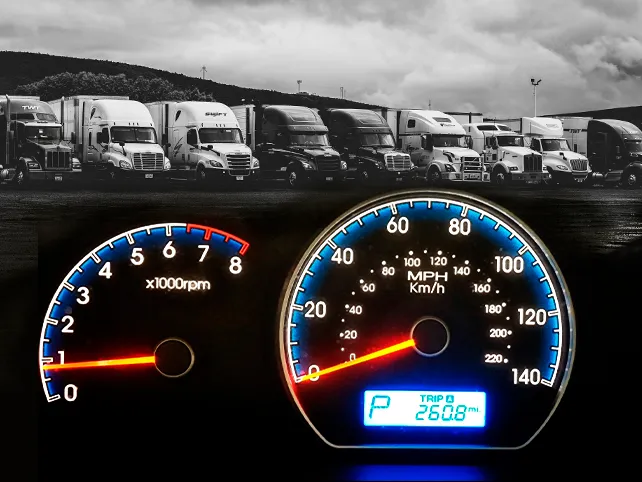
Excessive idling causes major losses in vehicle fleets. For a long time it was hard to control, but technology, and specifically GPS Monitoring Systems, brought surveillance and control methods that are revolutionizing fleet management.
Do you think idling is hurting your business? If so, it's time to take advantage of a satellite tracking system like Hunter Track. Read on to see what you can achieve by installing it.
Idling is the minimum engine speed at which a vehicle's engine can keep running. It happens when the engine is on even though the vehicle is stopped.
Idling can begin after as little as 10 seconds. Sometimes it's unavoidable, as at traffic lights or in moderately slow traffic.
Other times, however, it's unjustified and can be avoided, for example in heavy traffic where the vehicle may sit for hours. Another example is when the vehicle is parked just waiting for a delivery or sitting in service lines for a long time.
When a vehicle is running, it always emits gases and carbon dioxide as it burns fuel. So even when it's stopped, it keeps doing so and polluting the environment.
If a vehicle stays stopped with the engine running for too long, the chances of overheating and damage increase. This leads to repair costs that can be excessive and take a long time to complete. Engine damage can also affect nearby mechanical parts such as spark plugs.
Every minute of idling equals a portion of distance driven in terms of wear and use of the engine, fuel and other vehicle parts. So that time counts too.
Because idling time counts as vehicle use, it also counts toward preventive maintenance schedules. When that happens, the vehicle will need service even though it hasn't covered the scheduled mileage. In addition, fuel isn't burned at its optimal temperature, which can leave residue in the tanks that causes damage and speeds up the maintenance timeline.
An idling vehicle is more likely to be stolen. The vehicle is running with the keys in it and the driver at the wheel, which can be an easy temptation for criminals.
Hunter Track's satellite tracking offers direct and indirect ways to solve the idling problem in a vehicle fleet:
A fleet manager can see exactly where a vehicle is on a digital map. So if a vehicle has been stopped for a long time, it can be spotted just by looking at the map.
If a vehicle's doors open, it's usually stopped. That can alert the monitoring center or fleet manager to check whether it's idling.
Hunter Track organizes and generates detailed reports with information on idling. Each event can also be assigned to a specific driver.
Based on recorded changes in fuel use, it's possible to tell whether there has been too much idling.
Maintenance alerts are scheduled based on the date of the last service. If a vehicle needs service sooner, excessive idling may be the cause.
So, are you ready to solve the idling problem in your company? A GPS Monitoring System is the solution to address it. Best of all, you just need to contact us at 809.620.2002 or visit our website to request a quote. Our technicians are ready to give you all the information and complete the installation in record time.